ecological landscape design
For flourishing human habitats
How do you most want to live — and what kind of landscape might support that life?
When we shape them thoughtfully, the landscapes around our homes can support a genuine sense of belonging - places where our daily life can unfold in relationship with the land, the season, and our community, and bring deep joy and connection.
My work is guided by a simple intention: to bring people and place into flourishing relationship, creating environments where both human and more-than-human life can thrive.
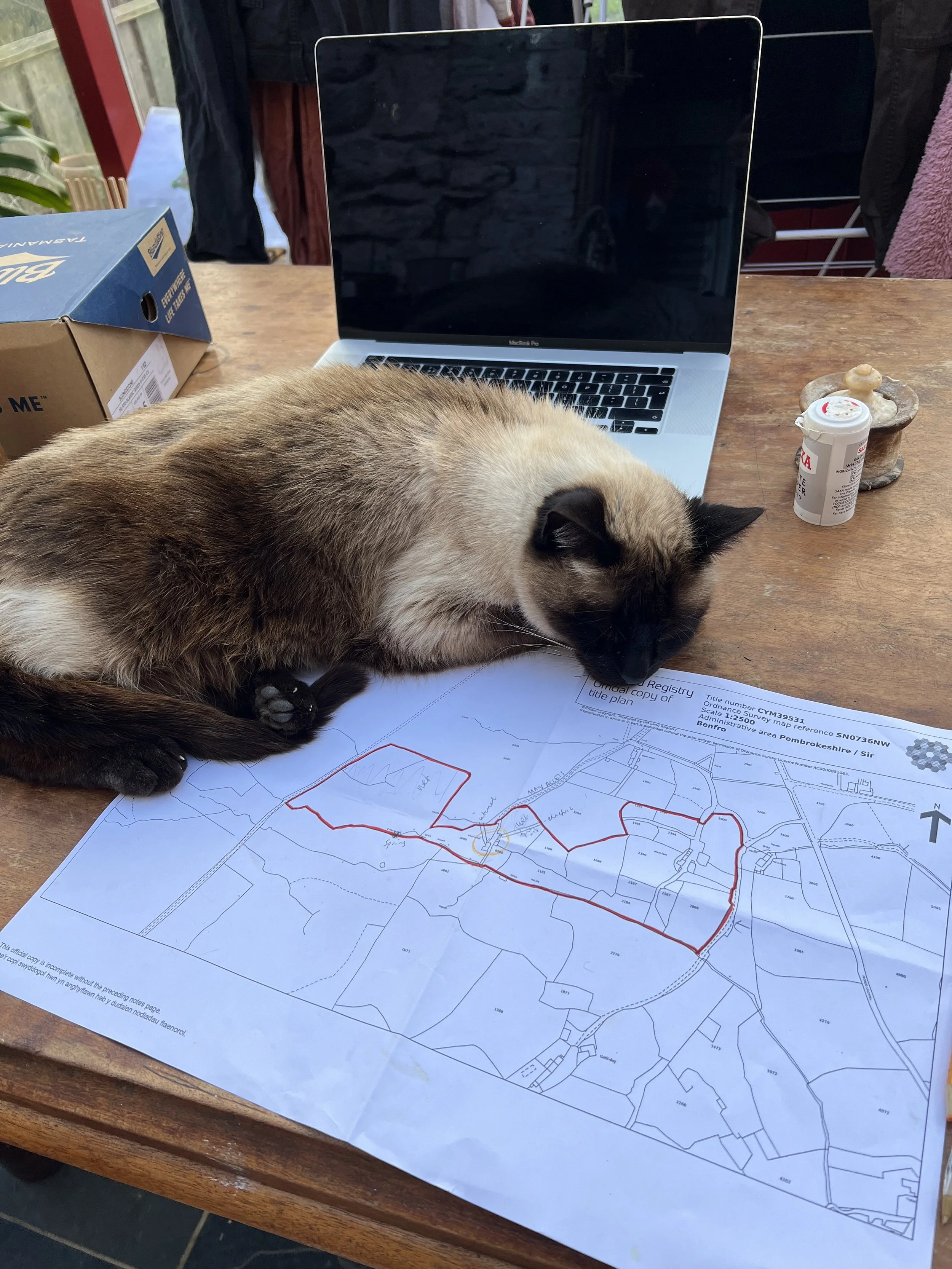
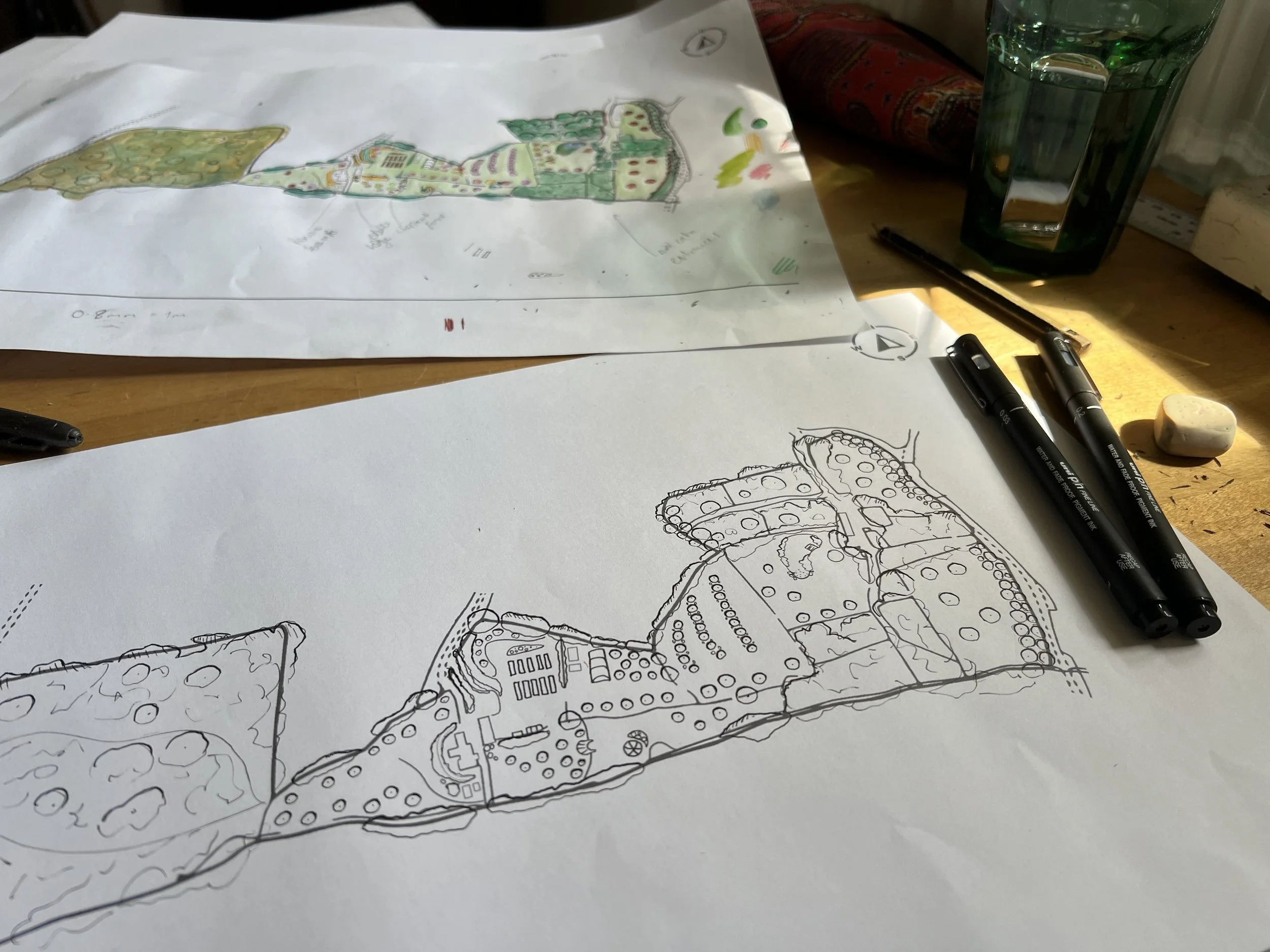
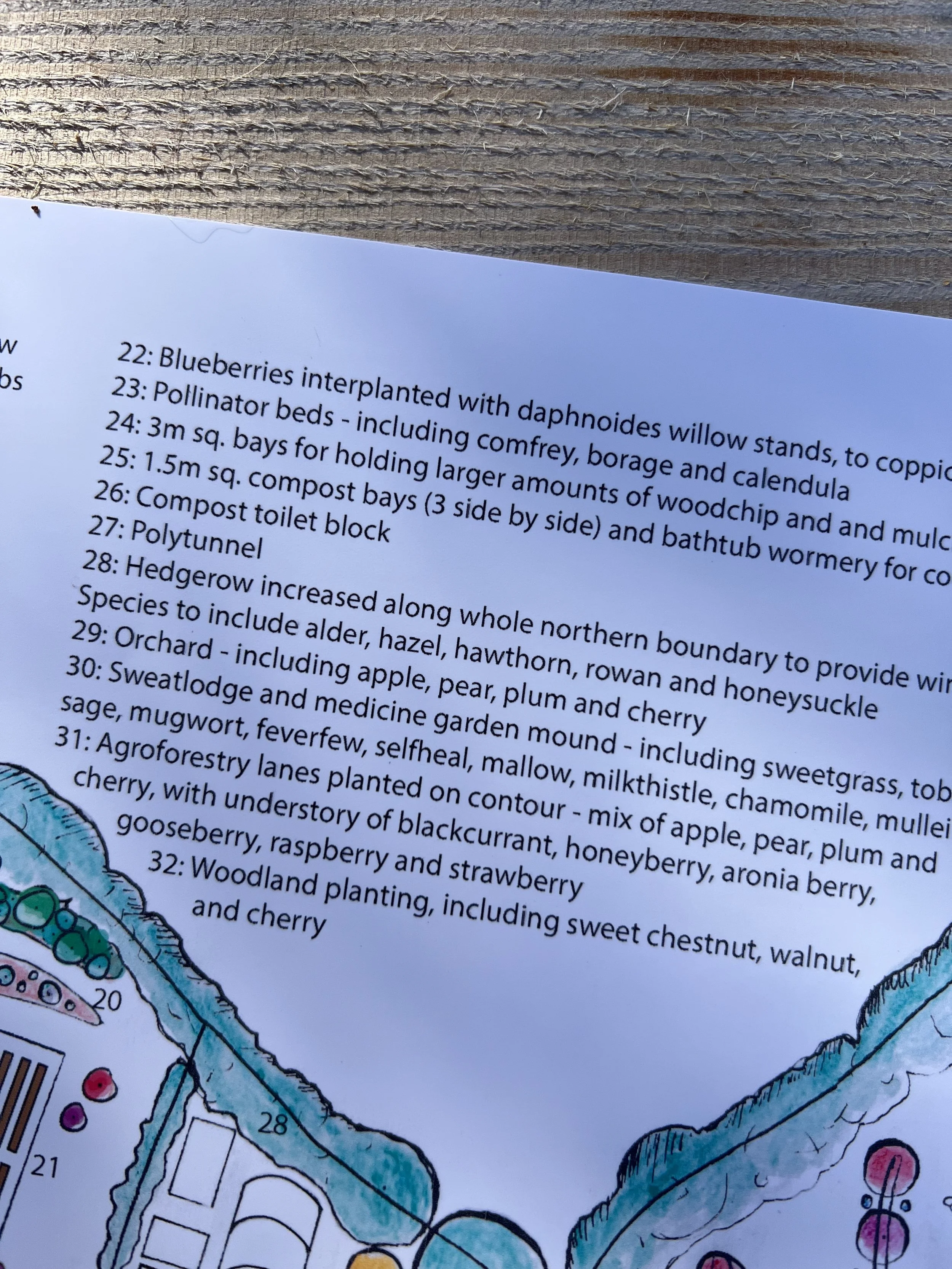
Recent projects
-
![]()
Biodiverse small farm design
A regenerative farm and biodiverse edible landscape
-
![]()
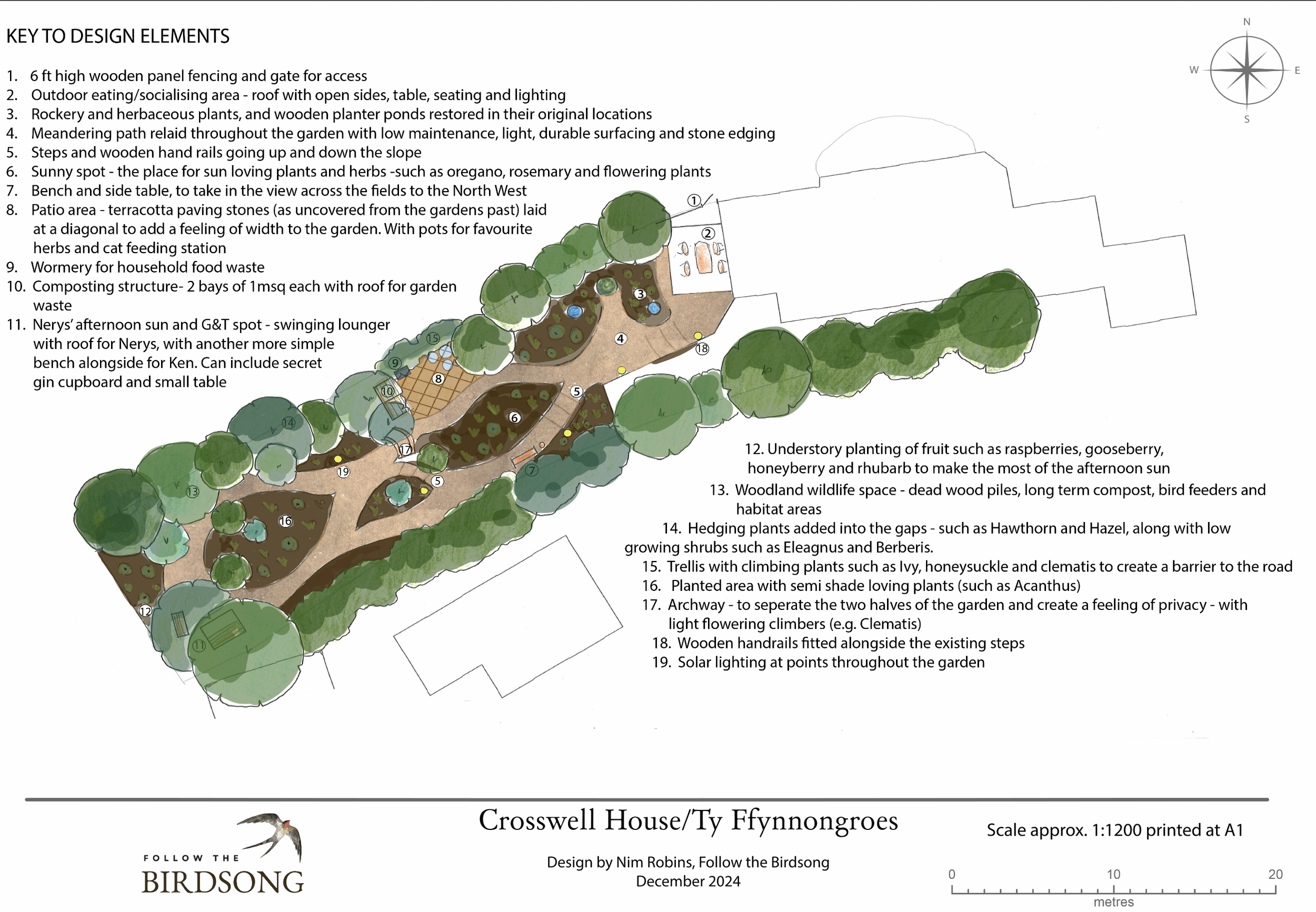
Crosswell house
A restorative garden design - a retreat for people and nature and a haven for wildlife, rich in habitat and biodiversity
-
![]()
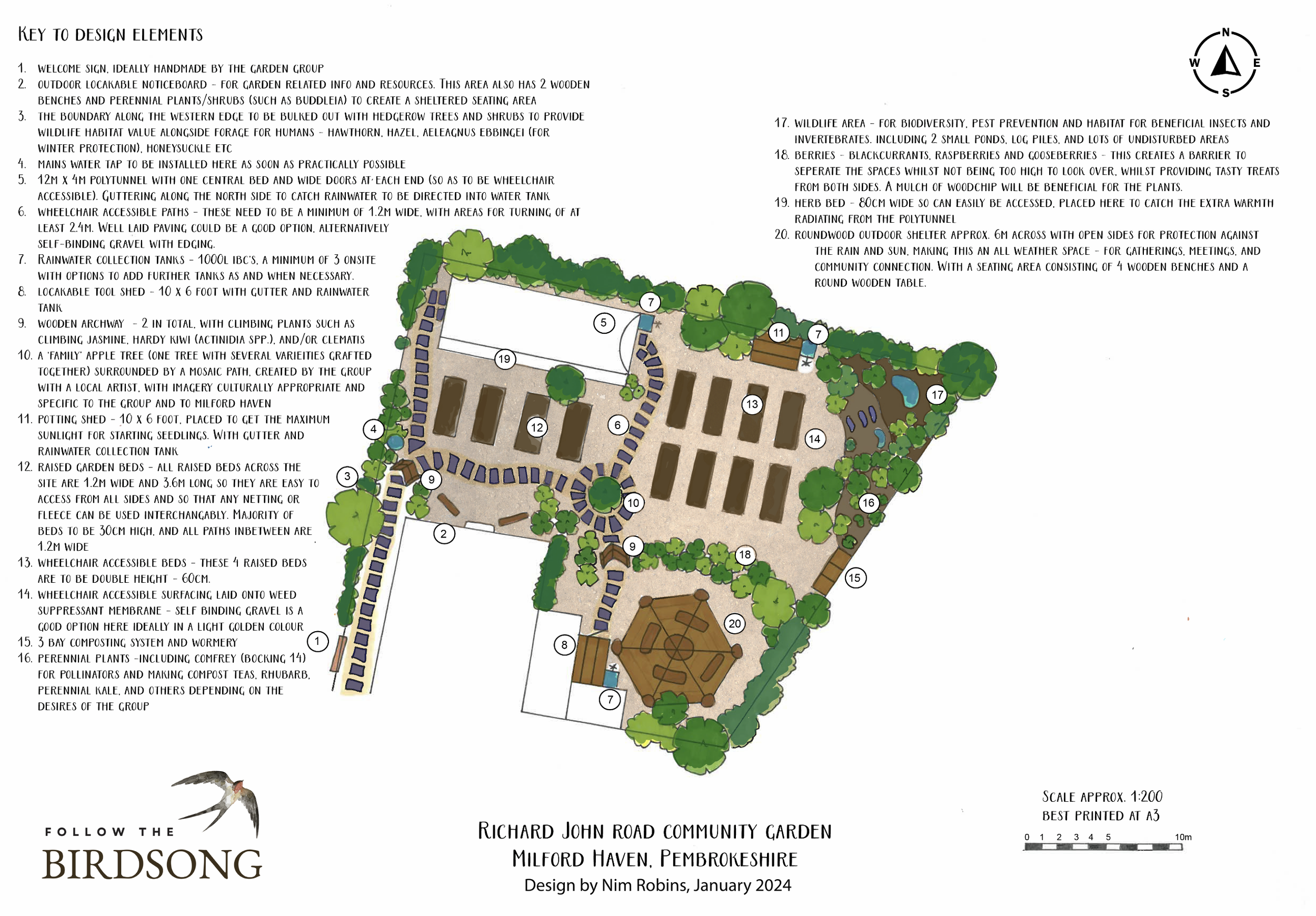
Richard John road community garden
A community garden project deep within the town of Milford Haven, Pembrokeshire
Working together
I love getting to know a new landscape. Each curve, each ebb and flow of where wild meets cultivated. Discovering where our non-human friends and relations live, which birds live where, which are missing but should be present, looking for the relationships that already shape the ecology of the place. Uncovering what has happened there, what has been before and what things could become.
If you want a home or project where the intention is to create a biodiverse haven where nature and humans can flourish together, then we may be a fit. I am committed to doing everything I can in my one wild and precious life to being a part of the solution - creating places where people can feel a sense of belonging, connection and joy. Living in abundant habitats filled with nutritious foods and flowers, with riotous birdsong to fill our mornings, flying insects filling the summer skies, and fungi mycelliating throughout deep rich dark soils throughout the landscape.
I know in my bones that the greatest joy comes from a life connected and in harmony with the living world around us, and my work is in service to that knowing.
My practice is guided by clear ecological ethics and I choose to work with clients who feel a genuine care for the living world and who wish to create places where biodiversity can strengthen and life can flourish. I don’t recommend interventions that compromise the long-term health of a place or its wider web of relationships, and whenever considering earthworks or the use of new materials I run all my design choices through solid ethics, sound reason and a hierarchy of resource use framework.
To find out more about me, my experience and my perspective, click here. .
the design process
I take on a limited number of projects each year in order to offer each landscape the depth of attention it deserves. Each landscape — and each client — is unique, but the structure below offers a sense of how we will move through the design journey together.
Stage 1 - survey
People survey
In-depth client interview/community consultation
Gathering historical and local knowledge to inform the design context
Identify a vision statement which encapsulates the dreams and aspirations for the project
Clarify the clients needs and wish list for the design
Site survey
In-depth land observations, including mapping microclimates, topography, vegetation, biodiversity, habitats to note, water flow, slope and aspect
Soil analysis (soil samples can be either carried out in-house or sent for formal detailed analysis dependent on project need)
Energy flow (sector) analysis – including sun, prevailing wind, water, traffic noise, pollution, view, movement of domesticated and wild animals etc.
Identifying available resources and limiting factors
Base map creation
Stage 2 - analysis
Identify the main functions, systems and elements of the design
Zone and flow analysis
Input – output analysis and relative location placement
Other permaculture tools as appropriate
Stage 3 - concept design
The design stage begins with a concept design, which is discussed with the clients to gather feedback
Stage 4 - detailed design and report
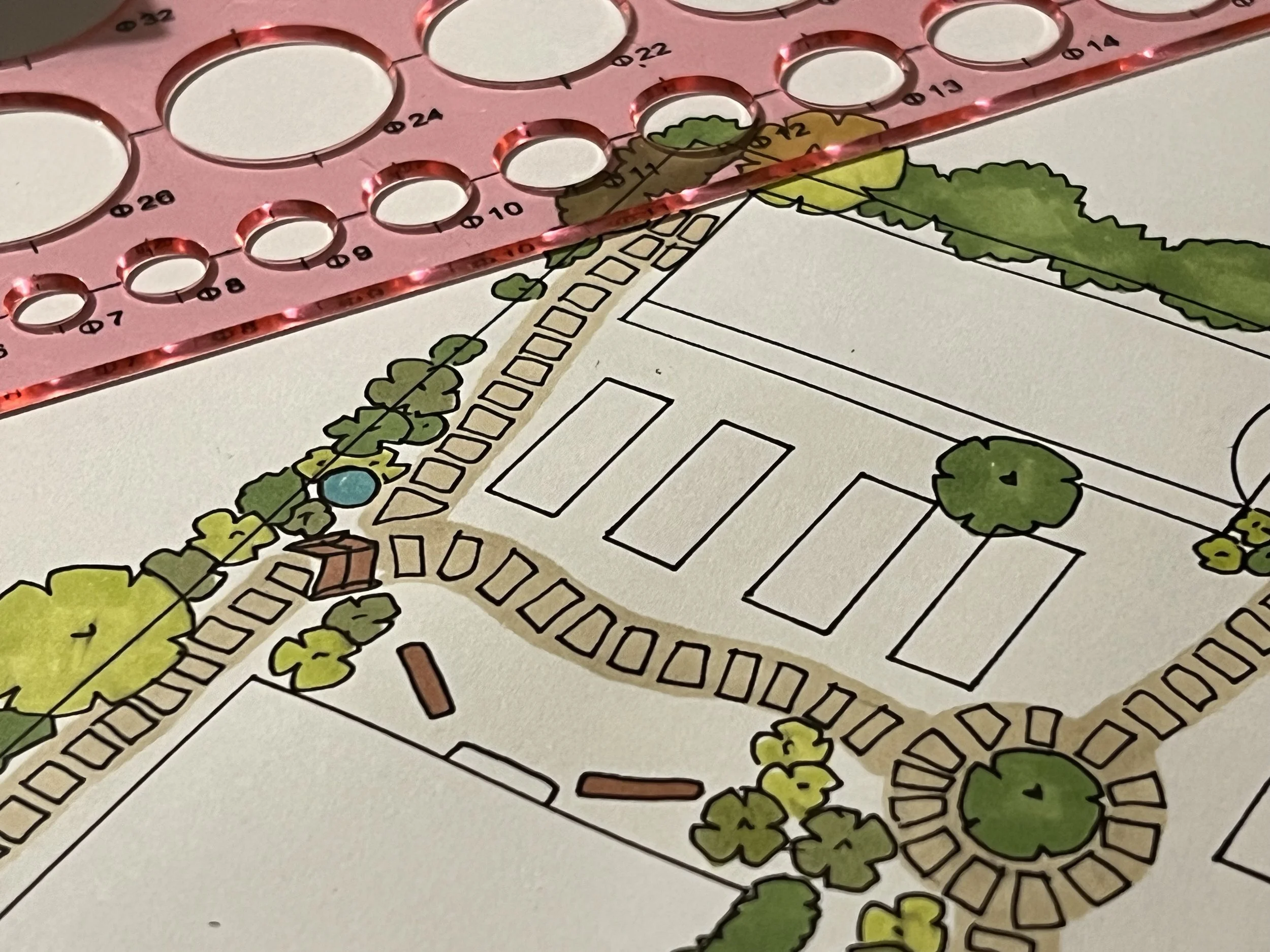
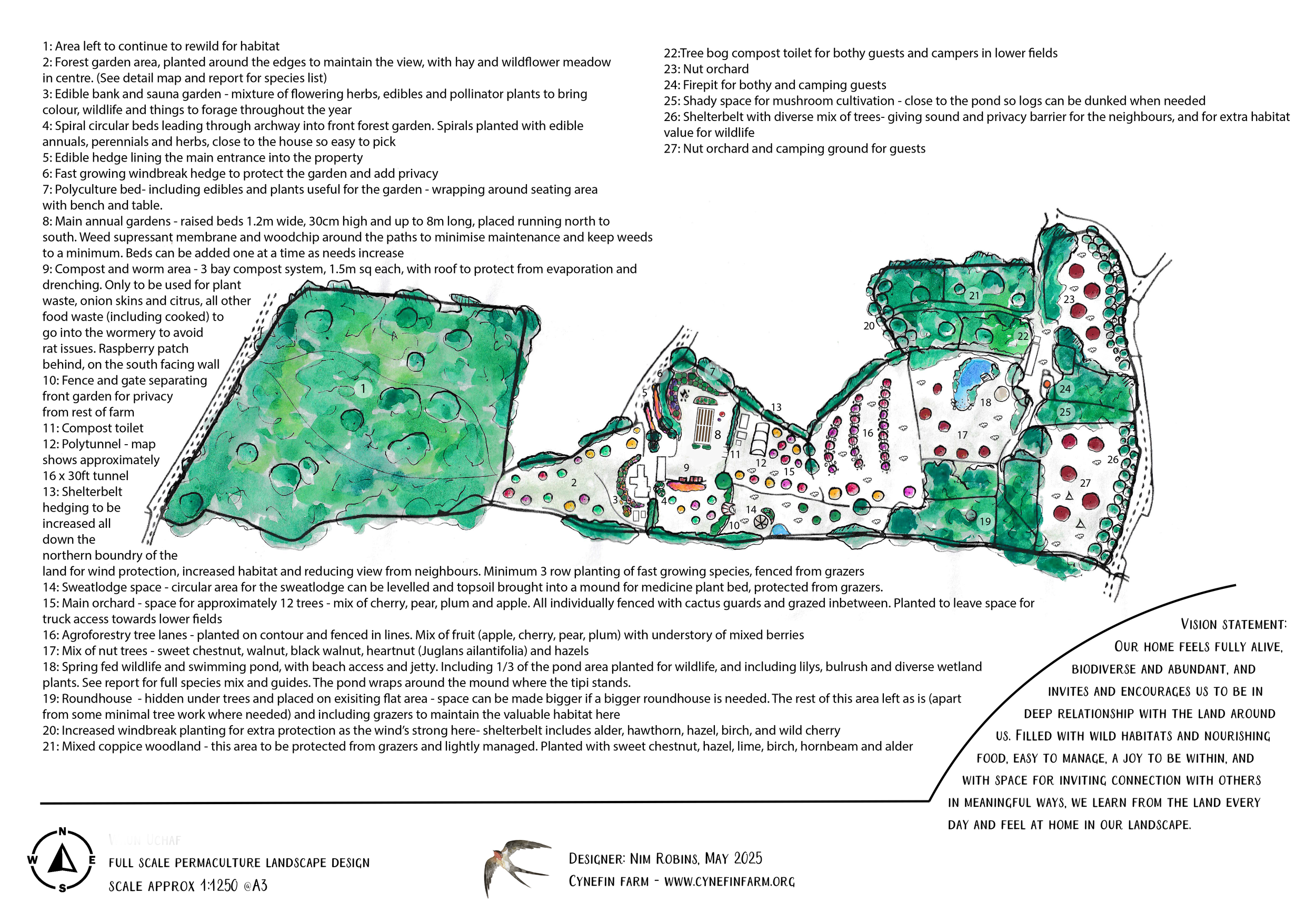
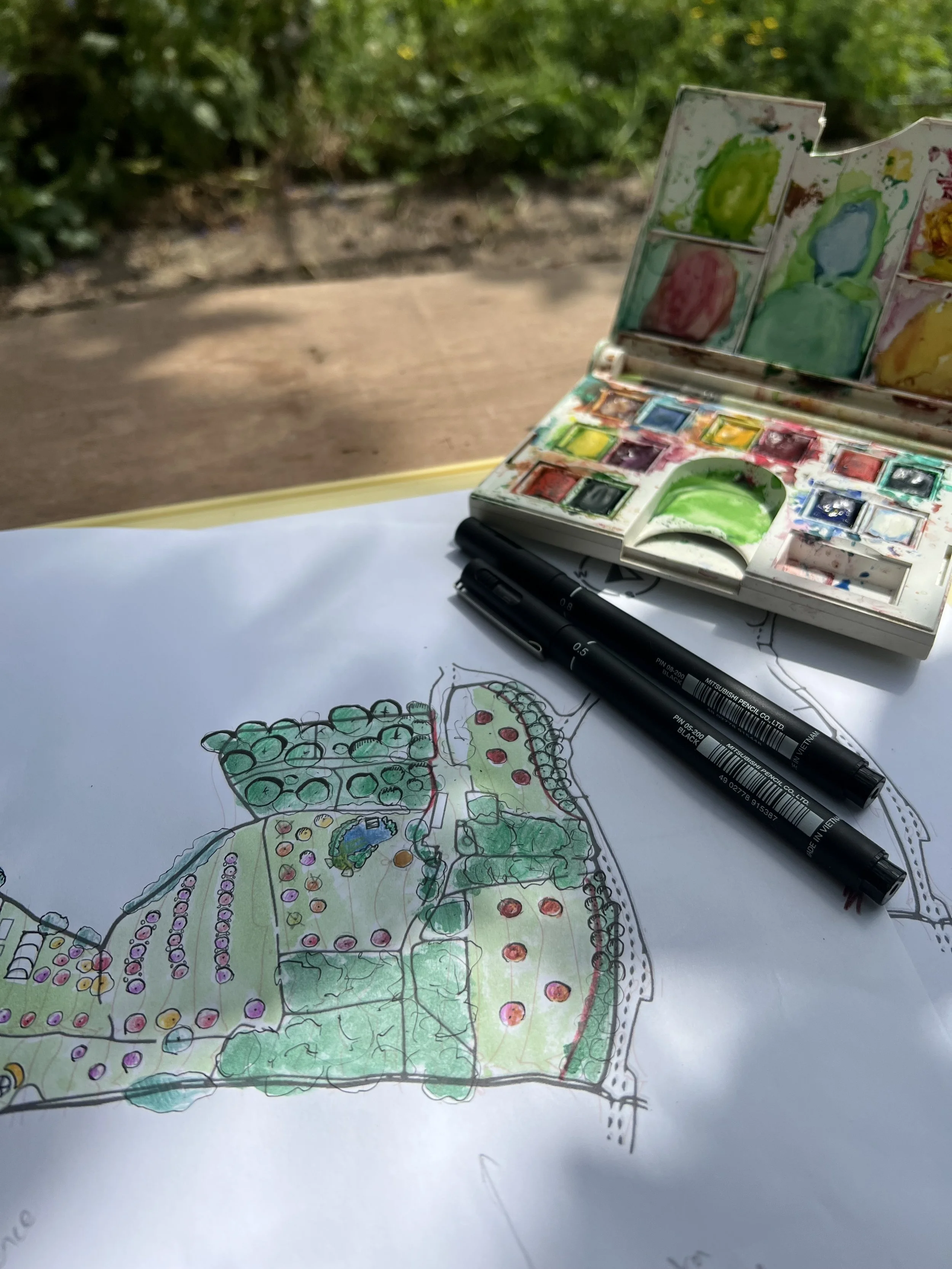
The A3 scale map will show an overview of all systems and is delivered in paper and online document. The map will be a blend of hand drawn/painted and digitally rendered, with a narrative accompanying and explaining the drawing
The design report includes all relevant information to move ahead with the design, including:
- a staged implementation plan (based upon the scale of permanence)
- ‘how to’ information, to offer guidance on how to get started on any new systems or elements within the design, with enough information to get started and links to resources to dive deeper
- estimated project costings
- a list of networks and organisations to source information, skills and resources from, including signposting to relevant training and extra support
- a range of other items may also be included, such as an overview of basic soil remediation approaches and any other information relevant to your site design
- Where useful, the design report can be delivered as a laminated booklet that you can take out into the field with you, at no extra cost
Stage 5 - Implementation
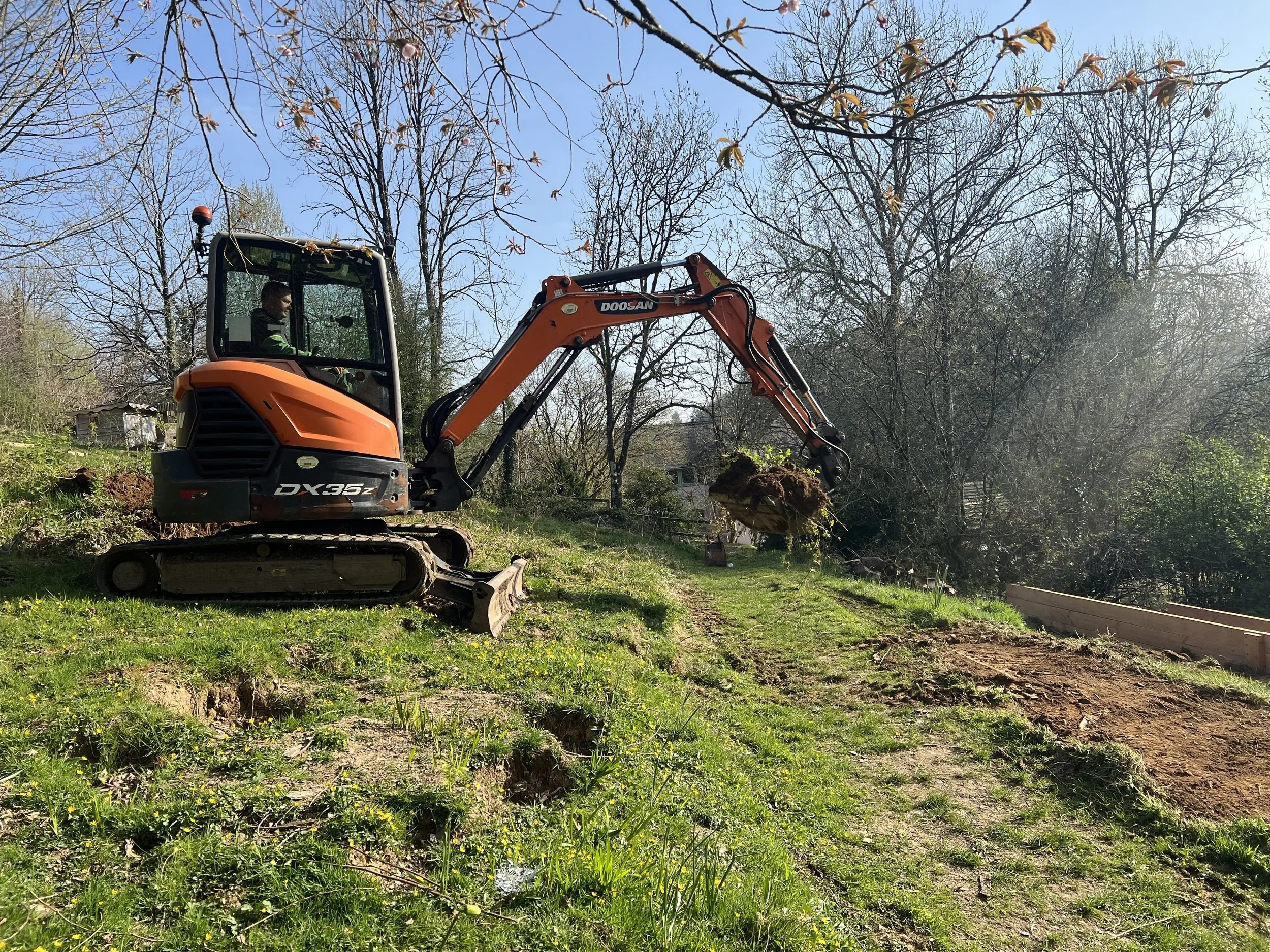
The design report and maps will then be passed over to the contractors to install – the clients can either choose to go with the contacts that we recommend or choose their own contractors if they wish
I will be available to discuss details with the implementation team to clarify any design details where needed
Stage 6 (optional) - mentoring and 1:1 training
· If you would feel it useful to have any extra mentoring at this stage I can offer specific training in anything included in the design. This may be getting started with propagating plants, developing composting systems or anything else relevant – either in person or online. Allocation for this time can be included in the quote or added at a later date.
You are welcome to contact me for a chat to explore this more. I offer a free of charge initial conversation to explore your landscape, your hopes for it, and whether working together feels like the right next step.